Atlantic
Salt-air corrosion: spec galvanized-after-weave or vinyl coat. Frost line 1.2m.
Fences · agricultural
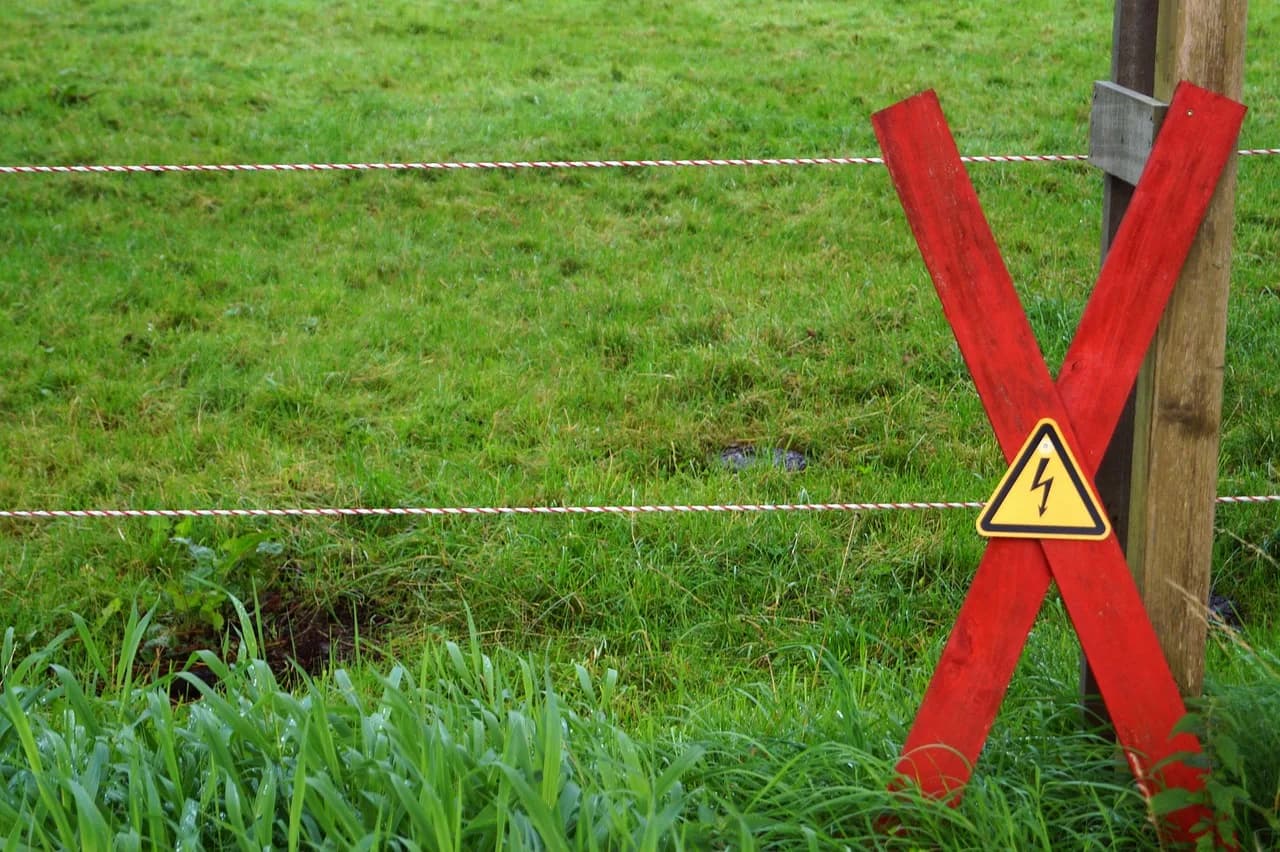
Solar and AC energizers, poly-wire, poly-rope, poly-tape, steel wire. Permanent and portable kits. Livestock + wildlife deterrent. Joule ratings for every herd size.
Electric fence is the highest-density containment tool in agricultural fence — short stored energy delivered as a pulsed shock teaches livestock to respect a fence that physically isn't strong enough to hold them. Fenced.ca supplies energizers (the "fence charger") in solar and AC variants sized by joule output: 0.1 J for paddock training and small portable; 1–4 J for permanent perimeter and moderate herd; 6–20 J for large ranch and predator deterrent; 40+ J for industrial wildlife exclusion. Energizer sizing follows wire length and "fence load" (vegetation contact, wet conditions, soil conductivity).
Wire substrate: poly-wire (steel filaments in polyethylene strand — visible, light, the temporary-fence standard); poly-rope (thicker poly-wire, equine-grade visibility, the horse-paddock standard); poly-tape (flat ribbon, maximum visibility, often layered with poly-rope on multi-strand horse fence); bare 12.5-ga galvanized wire (the permanent high-tensile substrate, lowest cost per linear foot).
Configuration: permanent perimeter typically 3–5 strands at 12″ vertical spacing for cattle, 6 strands for sheep/goat (more strands for smaller livestock), 2-strand offset on existing barbed-wire fence for predator deterrent. Portable kits use reel-and-stake systems for rotational grazing.
Charger sizing: 0.5 joule for <800 m of single-wire fence (backyard pet, small herd). 2–4 joules for 2-4 km (mid-size herds, multi-strand). 8–15 joules for 5+ km with 5–7 wire strands (large cattle ranches, deer exclusion). Gallagher, Premier 1, and Stafix are the dominant Canadian-distributed brands.
Wire and grounding: Galvanized smooth high-tensile wire (12.5 ga, 1300 lb tensile) on insulator-mounted posts. Grounding is critical — 3 × 2.4 m galvanized ground rods spaced 3 m apart, connected with insulated 10 AWG wire. Insufficient grounding is the #1 cause of weak shock complaints.
Safety + signage: Electric fence requires regulatory warning signs every 50 m visible from approach. Most Canadian provinces follow CSA C22.2 No. 25 for fence-energizer certification. Cannot be used on residential property lines facing public sidewalks.
Pricing & lead time: Electric fence pricing (DIY supply): 0.5J charger + 800 m wire kit runs $300–500, 5J charger + 2 km kit at $700–1,200, 10J charger + 5 km kit at $1,500–2,500. Installation labour at $3–6 LF. Grounding hardware mandatory. Same-week shipping on stocked items; specialty chargers (e.g., bear protection) add 2 weeks.
How electric fence stacks up against the alternatives — at a residential height of six feet, in median Canadian markets.
Stake the line, check setback rules with the municipality, locate utilities (Info-Excavation in QC, Ontario One Call elsewhere).
End, corner, and gate posts. Concrete footings to frost depth — 1.2m in most of the country, 1.8m in northern Alberta and the territories.
Spaced 10' on centre. Plumb each one before the concrete sets.
1⅝” galvanized pipe, slipped through line-post loop caps.
Tension along the top rail with a come-along, hog-ring to the rail every 24”. Tie wire every line post.
Bottom tension wire, gate hinges, latch hardware. Cap exposed wire ends.
Salt-air corrosion: spec galvanized-after-weave or vinyl coat. Frost line 1.2m.
Permis obligatoire in most municipalities. Bilingual quote PDFs standard.
OBC §9.10 for pool perimeters. Conservation Authority rules along the moraine.
Frost line 1.4–1.5m. Wind-rated panels for the shelterbelt swap-outs.
Coastal: vinyl coat. North: 1.8m frost, schedule-40 pipe for snow load.
Electric fence cost in Canada in 2026 depends on application. Agricultural / pasture electric fence — high-tensile smooth wire on insulated posts with a low-impedance energizer — runs $1.50 to $4.00 per linear foot supply for 4-5 wire systems, plus $300-1,500 for the energizer (sized to total wire length and load). For 1,000 ft of perimeter expect $1,800-5,500 supply. Residential / security electric fence (used as a top-of-fence deterrent on industrial palisade or chain-link) runs $8-15 per linear foot supply plus the energizer, monitored or unmonitored. Pet containment electric fence is the cheapest at $400-1,500 supply for a typical residential lot, but that's a buried-wire signal system with collar receivers, not a charged perimeter. Installation labour adds $500-3,000 depending on length and terrain. Energizer choice — solar, plug-in 120V, battery — depends on power availability at the site.
Yes — electric fences are legal in Canada for both agricultural and security use, but rules vary by province and municipality. Agricultural electric fence is unrestricted in rural and farm-zoned land in every province; standard practice is CSA-certified low-impedance energizers, warning signage every 50 metres (CAN/CSA C22.2 No. 65 reference), and a grounded perimeter. Security / perimeter electric fence on top of a primary fence is allowed in most provinces for commercial and industrial properties with signage and minimum 2.4 m total height (so the energized strands sit above human reach), but several large municipalities — Toronto, Vancouver, Montreal — restrict or prohibit them in residential zones. Pet containment systems (collar-and-buried-wire) are legal everywhere as low-voltage signal devices. Always check your municipal bylaw before installing — provincial law sets the floor, municipal bylaw adds restrictions.
It depends on your municipality and zone. In most Canadian rural and small-town municipalities a low-impedance agricultural electric fence is allowed on residential acreage if the property is large enough to host livestock; in urban residential zones a perimeter electric fence is usually prohibited or restricted to a top-of-fence configuration on a primary fence at least 1.8 m tall. Toronto, Montreal, Vancouver, and Calgary bylaws all prohibit ground-level electric fence in residential zones. Pet containment systems (collar + buried signal wire) are not a regulated electric fence — those are legal everywhere as low-voltage signal devices. Before installing call your municipal building department and ask specifically about "electrified fence" or "clôture électrifiée" — language matters, since some bylaws regulate "barbed wire" separately. Signage and grounding to CSA standards are mandatory wherever electric fence is permitted.
An electric fence does not need to be a closed loop — it's not a complete circuit in the household-wiring sense. The current path is: energizer → fence wire → animal touches wire → animal's body → ground → grounding rods → back to energizer. A linear fence with a dead-end at each terminal works fine as long as the energizer terminal is connected to the wire and the ground terminal is connected to grounding rods (typically 3 galvanized rods, 6-8 ft long, driven 10 ft apart). Where layout matters: long fences need conductive loops at corners and gate jumpers under buried wire so the charge reaches every section equally. Dry ground and frozen soil reduce return current; in winter many farms add a second "earth-return" wire on the fence itself as a parallel ground path. A weak fence shock is almost always a grounding problem, not a wire problem.
Yes — Fenced.ca operates as a Canada-wide multi-category fence supplier, with our Canada-wide network in Toronto, Montreal, Calgary, and Vancouver. We ship every fence category we carry — chain-link, wood, vinyl, aluminum, wrought-iron, steel, privacy, picket, split-rail, glass pool, temporary, security, farm, dog, electric, garden, gabion, snow, silt, and driveway gates — to all 10 provinces. The three Territories are quote-on-request because freight is the dominant cost line; we will quote Whitehorse, Yellowknife, and Iqaluit, but a flatbed lane has to be confirmed first. We do not ship internationally. Installation is offered nationally through our vetted installer network where coverage exists, and supply-only for everything else.
Supply means we ship materials — panels, posts, hardware, gates — to your jobsite or yard, and you (or your contractor) install. This is our primary business and covers all 20 fence categories nationally. Rental is offered for temporary fence (construction site fence, event fence, crowd-control barrier), silt fence, and snow fence — categories where the fence comes down after a defined project window. Rental includes delivery, pick-up, and weekly billing; minimum rental is typically one week, with multi-month and multi-site rates available. Installation is offered through our regional installer network in major metros (GTA, Montreal, Calgary, Vancouver, Ottawa, Edmonton) and quoted per-project elsewhere. You can mix and match: supply only, rental only, or supply + install as a turnkey package.
Ready to spec it?